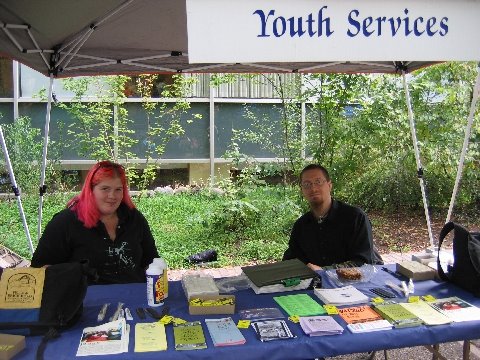
I am an outreach worker and youth advocate with nearly 10 years of experience working with high-risk youth & young adults on the streets of Portland. I am also the overnight shelter staff who coordinated with Portland Police Officers in an effort to make the arrest of those involved in the senseless murder of Jessica Williams as peaceable and efficient as possible. I have not read author (and Portland Tribune staff member) Rene Denfeld’s book, All God's Children, but I spoke with her at length after reading her article about the European Kindred which made reference to her study of “the dark & violent world of street families.” So it is with grave disappointment that I read Nick Budnick’s sensational and damaging cover story this past Friday, January 26, 2007.
The article and accompanying interview, and presumably Denfeld’s book, reinforces many popular negative stereotypes about young people experiencing homelessness in our community. Contrary to Budnick’s wrong-headed oversimplification, the world of street kids is neither “cult-like” nor “secretive” to many of the outreach workers who have made it our business to meet young people where they’re at: in the streets, camps, and squats they inhabit. Many of us, including dozens of trained Yellow Brick Road volunteers, “penetrate” this “dark & violent world” every night. We’re just not wasting our time posing for suspiciously self-serving photographs. Portland’s “street-kid culture”, like many other cities, reflects the demographics and political undercurrents of the surrounding environment, racism and homophobia included. Many street youth in Portland are from white, middle-class homes. It doesn’t take an edgy journalist with an agenda and publishing contract to point this out. And it should not come as a surprise to anyone paying attention to what is still one of the less diverse cities in the nation. Does this presume that white middle-class homes don’t experience abuse, neglect, and dysfunction? Shame on you.
Denfeld’s book apparently puts forth the proposition that many homeless young people do not come from abusive or neglectful homes. True, many do not. But many do. I could hike into one of several urban camps this evening and talk to people I know who have come to the streets from horribly abusive families. One 15 year-old girl I visit regularly comes from a family with generational sexual abuse, mental illness, and drug addiction. Her father is a homeless sex offender in the Seattle area. Her mother loves her very much and would like her to return home. The problem is, this girl’s mother is addicted to methamphetamine and lives with a grandfather who has been accused of sexual molestation by multiple family members. I know this because I’ve spoken to this particular teen’s extended family, with her consent, in an effort to get her off the streets. This girl is not returning home and, like it or not, she’ll be camping in the woods until we can adequately wrap services around her that will alter the trajectory of her life. In the meantime, I continue my efforts as an outreach worker to teach her harm reduction and resiliency skills that enable her to develop as a human being.
Ah. There’s that word, “enable”, that us outreach workers hear so frequently. We’ve all met concerned citizens, police officers, business owners, and even homeless folks themselves who believe that social services "enable" young people to “take drugs and playact.” And if we’re not careful, even the most well-intended social service workers actually will enable homeless people to remain street dependent. The Homeless Youth Continuum, a collaboration of three independent non-profit organizations, was conceived precisely to prevent duplication of services and this kind of enabling. It isn’t a perfect system, but Budnick’s assertion that “providers often fail to screen the needy from the exploitative” is just plain wrong. I worked as a screener at the Access Center, one of the entry points to homeless youth services, and can personally attest to the broad range of young people we turn away, return home, and never see again. The Access Center has provided family mediation, reconciliation, referrals and resources, and follow-up inquiries. Most of those kids we turn away will never commit violent crimes or become aggressive panhandlers in downtown Portland. They won’t murder, rob, or steal. They're certainly not the stuff of sensational and opportunistic books.
And that brings us back to the “dark & violent world” of the streets. Sure, we can point our fingers at the strict hierarchies, disciplinary codes, and brutal nature of some street families. The “Sick Boys” and “Portland Riders” immediately spring to mind. But what of the vast majority of loosely organized homeless young people who never commit murder or other violent crimes? Again, they just don’t sell books. Anyone who truly believes that social services and the safety net they’ve created for young people have fostered a “remarkably lawless, savage kind of society” would do well reflecting for a moment on their view of young people. Do you really believe that young people are slouching toward a sort of Clockwork Orange dystopia in between free meals under the Burnside Bridge? This kind of thinking is neither new nor radical, as Budnick and Denfeld’s thinly-veiled promotional article and interview seem to suggest. In fact, such conclusions underscore the very fear and loathing of young people in our society that have escalated to nearly phobic proportions. It would seem Lord of the Flies has nothing on contemporary American youth and their feral proclivities!
The problems of homelessness are much more complicated and cut to the core of much larger societal issues such as poverty, race, class, addiction, mental health, and education. Youth homelessness also increasingly touches upon issues of gender, sexuality, and lack of meaningful and healthy options for young people. Clearly homelessness and violence have existed long before the advent of social services that seek to address these problems and, I assure you, if we were to remove services we would not end homelessness. Or violence. The kids on Portland's streets, regardless of where they're from, what brought them here, and what keeps them from transitioning, won't simply return home. Now let’s pretend for a moment that there is only one child on the streets of Portland tonight, and that child is your own. Would it matter how many others were on the street with that child? Would the child’s race, ethnicity, or socioeconomic background matter? Probably not. That child’s safety and wellbeing would be of paramount importance. You would probably like to know that there are outreach workers on the streets every night looking for that child and attempting to provide some small modicum of safety and engagement. Perhaps even shelter. Many of us outreach workers often remark that every day we are working to put ourselves out of business. If we end homelessness tomorrow, I’ll have plenty of things to keep me busy and ample means to earn a pleasant and sustainable livelihood. In the meantime I’ll continue to look homelessness in the eye and do my best to empower young people to find their way in the world.
The article and accompanying interview, and presumably Denfeld’s book, reinforces many popular negative stereotypes about young people experiencing homelessness in our community. Contrary to Budnick’s wrong-headed oversimplification, the world of street kids is neither “cult-like” nor “secretive” to many of the outreach workers who have made it our business to meet young people where they’re at: in the streets, camps, and squats they inhabit. Many of us, including dozens of trained Yellow Brick Road volunteers, “penetrate” this “dark & violent world” every night. We’re just not wasting our time posing for suspiciously self-serving photographs. Portland’s “street-kid culture”, like many other cities, reflects the demographics and political undercurrents of the surrounding environment, racism and homophobia included. Many street youth in Portland are from white, middle-class homes. It doesn’t take an edgy journalist with an agenda and publishing contract to point this out. And it should not come as a surprise to anyone paying attention to what is still one of the less diverse cities in the nation. Does this presume that white middle-class homes don’t experience abuse, neglect, and dysfunction? Shame on you.
Denfeld’s book apparently puts forth the proposition that many homeless young people do not come from abusive or neglectful homes. True, many do not. But many do. I could hike into one of several urban camps this evening and talk to people I know who have come to the streets from horribly abusive families. One 15 year-old girl I visit regularly comes from a family with generational sexual abuse, mental illness, and drug addiction. Her father is a homeless sex offender in the Seattle area. Her mother loves her very much and would like her to return home. The problem is, this girl’s mother is addicted to methamphetamine and lives with a grandfather who has been accused of sexual molestation by multiple family members. I know this because I’ve spoken to this particular teen’s extended family, with her consent, in an effort to get her off the streets. This girl is not returning home and, like it or not, she’ll be camping in the woods until we can adequately wrap services around her that will alter the trajectory of her life. In the meantime, I continue my efforts as an outreach worker to teach her harm reduction and resiliency skills that enable her to develop as a human being.
Ah. There’s that word, “enable”, that us outreach workers hear so frequently. We’ve all met concerned citizens, police officers, business owners, and even homeless folks themselves who believe that social services "enable" young people to “take drugs and playact.” And if we’re not careful, even the most well-intended social service workers actually will enable homeless people to remain street dependent. The Homeless Youth Continuum, a collaboration of three independent non-profit organizations, was conceived precisely to prevent duplication of services and this kind of enabling. It isn’t a perfect system, but Budnick’s assertion that “providers often fail to screen the needy from the exploitative” is just plain wrong. I worked as a screener at the Access Center, one of the entry points to homeless youth services, and can personally attest to the broad range of young people we turn away, return home, and never see again. The Access Center has provided family mediation, reconciliation, referrals and resources, and follow-up inquiries. Most of those kids we turn away will never commit violent crimes or become aggressive panhandlers in downtown Portland. They won’t murder, rob, or steal. They're certainly not the stuff of sensational and opportunistic books.
And that brings us back to the “dark & violent world” of the streets. Sure, we can point our fingers at the strict hierarchies, disciplinary codes, and brutal nature of some street families. The “Sick Boys” and “Portland Riders” immediately spring to mind. But what of the vast majority of loosely organized homeless young people who never commit murder or other violent crimes? Again, they just don’t sell books. Anyone who truly believes that social services and the safety net they’ve created for young people have fostered a “remarkably lawless, savage kind of society” would do well reflecting for a moment on their view of young people. Do you really believe that young people are slouching toward a sort of Clockwork Orange dystopia in between free meals under the Burnside Bridge? This kind of thinking is neither new nor radical, as Budnick and Denfeld’s thinly-veiled promotional article and interview seem to suggest. In fact, such conclusions underscore the very fear and loathing of young people in our society that have escalated to nearly phobic proportions. It would seem Lord of the Flies has nothing on contemporary American youth and their feral proclivities!
The problems of homelessness are much more complicated and cut to the core of much larger societal issues such as poverty, race, class, addiction, mental health, and education. Youth homelessness also increasingly touches upon issues of gender, sexuality, and lack of meaningful and healthy options for young people. Clearly homelessness and violence have existed long before the advent of social services that seek to address these problems and, I assure you, if we were to remove services we would not end homelessness. Or violence. The kids on Portland's streets, regardless of where they're from, what brought them here, and what keeps them from transitioning, won't simply return home. Now let’s pretend for a moment that there is only one child on the streets of Portland tonight, and that child is your own. Would it matter how many others were on the street with that child? Would the child’s race, ethnicity, or socioeconomic background matter? Probably not. That child’s safety and wellbeing would be of paramount importance. You would probably like to know that there are outreach workers on the streets every night looking for that child and attempting to provide some small modicum of safety and engagement. Perhaps even shelter. Many of us outreach workers often remark that every day we are working to put ourselves out of business. If we end homelessness tomorrow, I’ll have plenty of things to keep me busy and ample means to earn a pleasant and sustainable livelihood. In the meantime I’ll continue to look homelessness in the eye and do my best to empower young people to find their way in the world.
Dennis Lundberg
Program Supervisor
Janus Youth Outreach Programs
dlundberg@janusyouth.org