Wednesday, June 20, 2007

PROJECT HOMELESS CONNECT


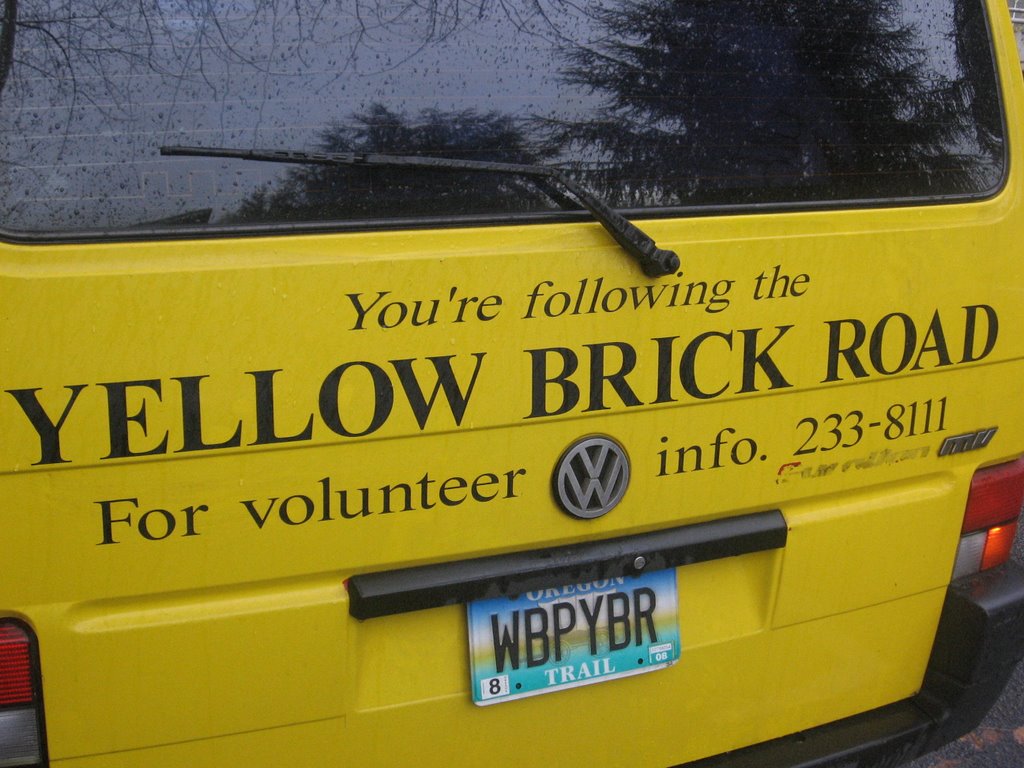
Project Homeless Connect is a collaboration of agencies, social services, and the Portland community at large coming together to meet each other and help solve issues of homlessness. Please spread the word about this amazing event and if you wish to get involved as a volunteer you can find more information here.

Thursday, May 24, 2007

OUT OF THE SHADOWS

OUT OF THE SHADOWS:
Service providers discuss ways to improve outreach to sex workers


by Joanne Zuhl, Street Roots Contributing Writer

Leslie Bull: Poet, performance artist, filmmaker, graduate student, sex worker. No, not sex worker - ho. Career ho. Successful ho, and one outspoken activist of a ho.

"I never really got out, things just changed," said Bull. "I started trading sex for drugs at age 15. At 20, I turned my first trick for money. I was off drugs at the time and hooked up with an old-school pimp who taught me the basics of the trade. I looked really young and fresh. I worked bars, escort services, and the street. Sometimes I made a lot of money, up to $500 per date.

"I kept working (hoing), mostly alone but sometimes with a pimp, off and on for the next 12 years. I did it all, from high-class call girl to homeless junkie ho, and lots in between. My longest time homeless and working the street was three years. I left the streets at age 32, got my G.E.D., and ended up graduating from PSU. All through college I wrote about being a street ho. I ended up getting my work published by Emi Koyama (www.eminism.org), making a video with Penny Arcade and Ariel Lighteningchild titled, "on being a junkie ho in sex worker world," and performing on two national tours with the "Sex Worker Art Show." For me, along with being employment, hoing is a state of mind I don't feel I will ever leave, or ever want to."

Bull is now lending her experience and advocacy to the Sex Worker Outreach Coalition, a new network of advocates using a harm-reduction model to improve the lives of people in all aspects of the sex industry, formal or otherwise.

Still in its formative stages, the Sex Worker Outreach Coalition's mission is not one of salvation but of service, making sure needs are met without the social prejudices and preaching that can keep sex workers from seeking assistance with such matters as health care or escaping violence.

For Bull, the importance of this coalition can be summed up simply: "To stop the hate."

To date, the coalition boasts members from the Portland Women's Crisis Line, Legal Aid of Portland, Cascade AIDS Project, YWCA of Clark County, Outside In and the Bad Dateline, among other affiliations.

"What we've seen over the years is that there just isn't much in the way of direct programming available to commercial sex workers," said Wayne Centrone, medical director of the Outreach Program for Outside In. "What little programming is available seems to be incongruent. It's not connected and there's no one agency that acts as a bridge building between all of the other agencies."

Liberating Ourselves Through Understanding Sexploitation, or LOTUS, has come and gone, as has Danzine, both groups that worked on behalf of people in the sex trades to access services. The Lola Green Baldwin Foundation is one of the only programs in Portland specifically serving people in the industry, however, it is not a member of the coalition at this time.

For the past year, Outside In has conducted a pilot project with Cascades AIDS Project to deliver health care and other services directly to the hardest to reach populations. The organizations staff a 38-foot mobile van along 82nd Avenue, complete with a physician, medical assistant, social workers, syringe exchange services, and a pharmacy. Clients to the van include sex workers who prostitute along the 82nd Avenue corridor.

"They've been ostracized by society," Centrone said. "We don't' really know what to do with them. It's a criminal activity, so you can't walk into an emergency department and say, 'I'm a sex worker.'"

According to Centrone, workers with this pilot project found overwhelmingly that clients seeking services are looking to make a change in their lives but lack the personal advocacy skills to do it on their own.

As the coalition develops, members hope to incorporate the involvement of people in the industry to identify and address the needs of sex workers from all walks of life.

"Our objective is to find out what the needs of the community are and to let them know we're here should there be any experience of domestic assault or violence," said Melissa, an advocate for victims of sexual assault and outreach worker with the Portland Women's Crisis Line. (Given the nature of her outreach, Melissa did not want her last name used, to protect her safety.) "It's becoming more and more apparent to us that using a harm-reduction philosophy is going to be the best way to make sure that everybody out there is getting services they deserve."

The Portland Women's Crisis Line began as a rape hotline back in 1973, but found it was receiving as many calls related to domestic violence. In 1975, the organization adopted a new mission to serve women and children who were victims of domestic and/or sexual violence and/or sexual violence. The organization also provides direct services to people engaged in, or affected by the commercial sex industry.

The sex industry runs the gamut of occupations and activities, Melissa said, spanning legal striptease acts in a club, to prostitution, escort services and "lingerie modeling." It also includes survival trade, the trading of sexual services for basic needs, such as food and shelter, or alcohol or drugs.

"It's a population that has been historically really marginalized and felt excluded from a lot of those services that are out there," Melissa said. "There is just a history of feeling judged. There are some programs out there that would not be able to continue to support someone in the sex industry if they found out that that is how they support themselves."

That stigma has become a deterrent to seeking assistance, Melissa said.

"What I see is that that is just reducing the chances that people who really need services are going to get them," Melissa said. "Everybody deserves to have the same things available to them, regardless of what their choice in profession is, or what they're life circumstances are."

Melissa emphasizes that experiences in the sex industry are different for everyone. Sex work has become synonymous with abuse and violence, and that has established a sweeping victimization of people in the industry, whether or not it applies to every individual. The violence is absolutely real, she says, and sex industry workers are at a higher risk, but the combined identity of sex worker and victim is pushing people underground and away from the services that can help them.

Bull says she wasn't victimized by prostitution, "I was victimized by rapists, beaters, haters, momos, thieves, and cops, but not by hoing."

Bull said she reserved a special animosity for tricks that wanted to "save" her, and ran from the do-gooders trying to put her out of business.

"As for the do-gooders, they might as well be the police," Bull said. "I wanted nothing to do with them, as their goal was to shame me and starve me out in the name of making me "good." I was "good" if I worked at Wal-Mart or scrubbed floors for minimum wage, but "bad" if I sold sexual favors for 10 times the money. My "badness" could only be cured by the do-gooders and the dreary, menial-labor poverty they wanted to make of my life."

Leslie Peterson, primary trainer for the Portland Bad Date Line, says the industry is driven more by economics and social issues than sex. The Bad Date Line collects reports on violent customers in the sex industry and distributes them in a monthly publication to raise awareness among workers.

"The Sex Worker Outreach Coalition is forming as we speak, so what its goals are and what it's going to accomplish are still unfolding," said Peterson. "I think that having different service agencies being able to communicate and share and build something together is going to really help respond to people's needs. People who are doing this activity are misunderstood, and I think it's going to be helpful for different reasons, to help us better understand how to serve people doing these activities."

Today, the oldest profession is changing with the newest technology. Street walkers who used to advertise and make connections on the streets are now able to line up a week's worth of work by cell phone and Internet. From an outreach worker's perspective, this affordable, ubiquitous technology has actually further isolated the most at-risk workers in the industry.

"You can hop from cab to cab and never be seen by an outreach worker," said Dennis Lundberg, program supervisor of the Yellow Brick Road street outreach program, a project of Janus Youth Programs. "Arranging this work through technology, you're just as vulnerable, but you're now isolated from people and agencies that might be there to serve you."

Lundberg works with homeless youths and people on the streets who are youth-identified, up to 27 years old. Most of the youths are in denial about their work, and many are using drugs to deal with it. As a result, the risk for getting hepatitis, HIV and other sexually transmitted infections runs high. Here again, however, the stigma surrounding their activities prevents many from seeking help on their own.

Lundberg, who attended the initial meeting of the coalition, said he would like to see sex workers involved in setting the agenda.

"I think nobody really understands the needs of sex workers like sex workers," Lundberg said. "There needs to be a place where their voices can be heard, where they can be part of an ongoing dialogue. There really needs to be a safe forum for that dialogue, so that they're not busted every time they speak out."

In the absence of an effective advocacy on behalf of sex workers, the city has followed a misdirected course of penalizing behavior, according to Centrone.

"Creating drug-free zones and prostitution-free zones allows us to not look at them as people," Centrone said. "And the lack of advocacy allows these things to happen. There wasn't anyone continuously monitoring the radar screens. Criminalizing behavior only creates criminals. These are people who deserve just as much an opportunity to gain the skills and create the life they want as any one of us do."

In the end, the problem isn't sex workers, Centrone said. The problem is poverty, exploitation, poorly funded and poorly staffed mental health services, a lack of access to alcohol- and drug-treatment programs, and limited resources to meet the needs of people.

"When a person finds them self on the street, they didn't just wake up and say I'm going to walk downtown and be a sex worker. It's a series of events. When we criminalize something, we negate that series. Life's not an event, it's a process, and little steps in that process are often the key."

Believing that trading sex for money is harmful to women is a morality issue, Bull says, and if someone thinks prostitution is wrong for religious or other reasons, they shouldn't participate. But when people blame prostitution for rape and the mistreatment of women they let the real perpetrators off the hook, she says.

"And if prostitutes are raped more often than other groups of workers, doesn't it stem from the hate; i.e., people believing deep down that prostitution, and by association prostitutes themselves, are wrong, shameful, harmful, and so on, even when this belief takes on a very "liberal" or "progressive" tone. These attitudes end up giving the rapos permission to rape, beaters a reason to beat, the cops a license to brutalize and harass, and the people a justification to turn their eyes from the violence.

"The current environment in amerikkka for prostitutes leads to the creation of Green River killers, forced labor, high-risk working conditions, self-hatred, broken families, legal persecution, etc. When women are made to believe hateful things about themselves, it makes them easy prey for abuse. Prostitution does not cause this abuse; abusers do! In order to help we must first recognize what we've been taught about prostitution and why. Who does the hate serve, who benefits, who loses?"

This article originally appeared in Street Roots April 1, 2006

Tuesday, May 01, 2007

OPEN HOUSE!


Janus Youth Programs is proud to announce the GRAND OPENING of our NEW DOWNTOWN LOCATION! Please join us for a ribbon-cutting ceremony and tour of our Homeless Youth Shelters, Street Outreach programs, and Access Center. For additional information contact us online at:
www.janusyouth.org

OPEN HOUSE
Thursday May 17th
5pm-7pm
1635 SW Alder Street
Downtown Portland

Friday, April 27, 2007

Yellow Brick Road Training This Sunday!

Yellow Brick Road Street Outreach would like to invite you to our upcoming Volunteer Training this
Sunday April 29th 2pm-5pm.

This training is free and open to all in the community!

Come learn more about us on Sunday April 29th 2pm-5pm.
Please RSVP for location at dlundberg@janusyouth.org

Monday, February 05, 2007

STREET COUNT 2007


Janus Youth Programs partnered with other local agencies again this year to conduct Multnomah County's 2007 Street Count. The Street Count collects critical and confidential data about people living on the streets, in abandoned buildings, in vehicles, urban camps, and doorways. The information we collect provides the most accurate approximate number of people living outdoors in our area and enables service providers and funders to meet the needs of these people more effectively. Outreach Specialists and trained volunteers with Yellow Brick Road and PDX-O&E were out in the field night and day surveying people experiencing homelessness where they live.

We invite you to take a photo-tour of some of the sites and locations we visited while conducting the 2007 Street Count.

HOMES UNDER BRIDGES

The following photos were taken with kind permission from people who live there, with the understanding that Janus Youth outreach workers would not disclose exact locations or identities. It is generally disrespectful and unsafe to photograph camps without prior relationships and permission. These photos represent various areas throughout Multnomah County.


HOMES IN THE WOODS

The following photos were taken with kind permission from people who live there, with the understanding that Janus Youth outreach workers would not disclose exact locations or identities. It is generally disrespectful and unsafe to photograph camps without prior relationships and permission. These photos represent various areas throughout Multnomah County.


Into the woods...


Abandoned sheds.


"C's" home.


The "compound"- home of some of the friendliest folks we've met.


Kitchen at the "compound".


"Angel"


The gym.


An Outreach Specialist at work...


Urban camping.


Nighfall in the woods.

HOMES NEAR RIVERS

The following photos were taken with kind permission from people who live there, with the understanding that Janus Youth outreach workers would not disclose exact locations or identities. It is generally disrespectful and unsafe to photograph camps without prior relationships and permission. These photos represent various areas throughout Multnomah County.


The tracks wind their way toward the river and we follow...


passing abandoned camps...


until we find occupied tents.


"T" invites us into his river-front home for a visit.


"T's" kitchen.


An unexpected splash of color.


"TRAMPS MUST DIE"

We were about to call it quits for the night when we noticed this freshly scrawled warning in the dirt.

Saturday, January 27, 2007

Dear Portland Tribune

Portland Tribune,

I am an outreach worker and youth advocate with nearly 10 years of experience working with high-risk youth & young adults on the streets of Portland. I am also the overnight shelter staff who coordinated with Portland Police Officers in an effort to make the arrest of those involved in the senseless murder of Jessica Williams as peaceable and efficient as possible. I have not read author (and Portland Tribune staff member) Rene Denfeld’s book, All God's Children, but I spoke with her at length after reading her article about the European Kindred which made reference to her study of “the dark & violent world of street families.” So it is with grave disappointment that I read Nick Budnick’s sensational and damaging cover story this past Friday, January 26, 2007.

The article and accompanying interview, and presumably Denfeld’s book, reinforces many popular negative stereotypes about young people experiencing homelessness in our community. Contrary to Budnick’s wrong-headed oversimplification, the world of street kids is neither “cult-like” nor “secretive” to many of the outreach workers who have made it our business to meet young people where they’re at: in the streets, camps, and squats they inhabit. Many of us, including dozens of trained Yellow Brick Road volunteers, “penetrate” this “dark & violent world” every night. We’re just not wasting our time posing for suspiciously self-serving photographs. Portland’s “street-kid culture”, like many other cities, reflects the demographics and political undercurrents of the surrounding environment, racism and homophobia included. Many street youth in Portland are from white, middle-class homes. It doesn’t take an edgy journalist with an agenda and publishing contract to point this out. And it should not come as a surprise to anyone paying attention to what is still one of the less diverse cities in the nation. Does this presume that white middle-class homes don’t experience abuse, neglect, and dysfunction? Shame on you.

Denfeld’s book apparently puts forth the proposition that many homeless young people do not come from abusive or neglectful homes. True, many do not. But many do. I could hike into one of several urban camps this evening and talk to people I know who have come to the streets from horribly abusive families. One 15 year-old girl I visit regularly comes from a family with generational sexual abuse, mental illness, and drug addiction. Her father is a homeless sex offender in the Seattle area. Her mother loves her very much and would like her to return home. The problem is, this girl’s mother is addicted to methamphetamine and lives with a grandfather who has been accused of sexual molestation by multiple family members. I know this because I’ve spoken to this particular teen’s extended family, with her consent, in an effort to get her off the streets. This girl is not returning home and, like it or not, she’ll be camping in the woods until we can adequately wrap services around her that will alter the trajectory of her life. In the meantime, I continue my efforts as an outreach worker to teach her harm reduction and resiliency skills that enable her to develop as a human being.

Ah. There’s that word, “enable”, that us outreach workers hear so frequently. We’ve all met concerned citizens, police officers, business owners, and even homeless folks themselves who believe that social services "enable" young people to “take drugs and playact.” And if we’re not careful, even the most well-intended social service workers actually will enable homeless people to remain street dependent. The Homeless Youth Continuum, a collaboration of three independent non-profit organizations, was conceived precisely to prevent duplication of services and this kind of enabling. It isn’t a perfect system, but Budnick’s assertion that “providers often fail to screen the needy from the exploitative” is just plain wrong. I worked as a screener at the Access Center, one of the entry points to homeless youth services, and can personally attest to the broad range of young people we turn away, return home, and never see again. The Access Center has provided family mediation, reconciliation, referrals and resources, and follow-up inquiries. Most of those kids we turn away will never commit violent crimes or become aggressive panhandlers in downtown Portland. They won’t murder, rob, or steal. They're certainly not the stuff of sensational and opportunistic books.

And that brings us back to the “dark & violent world” of the streets. Sure, we can point our fingers at the strict hierarchies, disciplinary codes, and brutal nature of some street families. The “Sick Boys” and “Portland Riders” immediately spring to mind. But what of the vast majority of loosely organized homeless young people who never commit murder or other violent crimes? Again, they just don’t sell books. Anyone who truly believes that social services and the safety net they’ve created for young people have fostered a “remarkably lawless, savage kind of society” would do well reflecting for a moment on their view of young people. Do you really believe that young people are slouching toward a sort of Clockwork Orange dystopia in between free meals under the Burnside Bridge? This kind of thinking is neither new nor radical, as Budnick and Denfeld’s thinly-veiled promotional article and interview seem to suggest. In fact, such conclusions underscore the very fear and loathing of young people in our society that have escalated to nearly phobic proportions. It would seem Lord of the Flies has nothing on contemporary American youth and their feral proclivities!

The problems of homelessness are much more complicated and cut to the core of much larger societal issues such as poverty, race, class, addiction, mental health, and education. Youth homelessness also increasingly touches upon issues of gender, sexuality, and lack of meaningful and healthy options for young people. Clearly homelessness and violence have existed long before the advent of social services that seek to address these problems and, I assure you, if we were to remove services we would not end homelessness. Or violence. The kids on Portland's streets, regardless of where they're from, what brought them here, and what keeps them from transitioning, won't simply return home. Now let’s pretend for a moment that there is only one child on the streets of Portland tonight, and that child is your own. Would it matter how many others were on the street with that child? Would the child’s race, ethnicity, or socioeconomic background matter? Probably not. That child’s safety and wellbeing would be of paramount importance. You would probably like to know that there are outreach workers on the streets every night looking for that child and attempting to provide some small modicum of safety and engagement. Perhaps even shelter. Many of us outreach workers often remark that every day we are working to put ourselves out of business. If we end homelessness tomorrow, I’ll have plenty of things to keep me busy and ample means to earn a pleasant and sustainable livelihood. In the meantime I’ll continue to look homelessness in the eye and do my best to empower young people to find their way in the world.

Dennis Lundberg
Program Supervisor
Janus Youth Outreach Programs
dlundberg@janusyouth.org

Tuesday, January 23, 2007

Produce Row Cafe


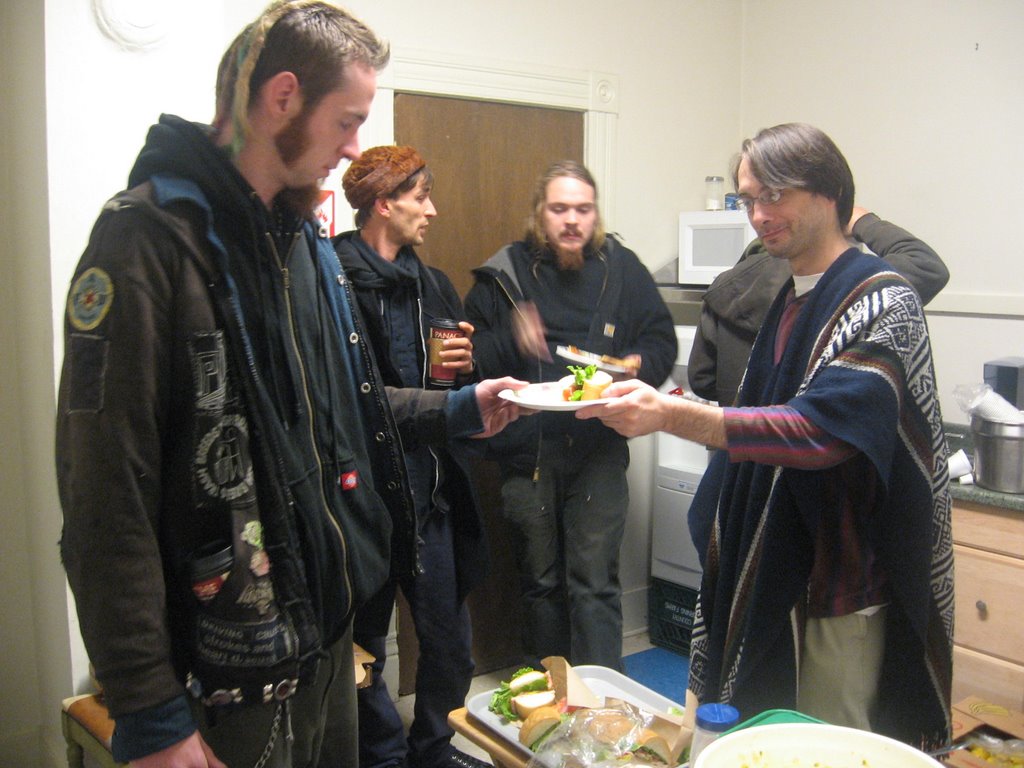
We'll be using our blog to periodically recognize some of the many amazing individuals and organizations that generously support our services to those in need. Among those who have stepped up to help us provide nutritious food to homeless youth and young adults is Produce Row Cafe. This cozy Portland cafe is nestled in the southeast warehouse district by the train tracks. Every week for nearly a year they have been providing two HUGE 24" sub-sandwiches and hearty homemade soups for our weekly drop-in program, PDX: Outreach & Engagement. Most weeks their food is devoured by our hungry and very appreciative drop-in guests within thirty minutes! On behalf of our outreach workers and the young people who visit our program, we wish to say THANK YOU to everyone at Produce Row Cafe! Your consistent food contributions make a huge difference in the daily lives of young people experiencing homelessness in our community. Please drop by Produce Row Cafe and grab a pint or a meal. Tell them Yellow Brick Road sent you!

204 SE Oak St
Portland, OR 97214
(503) 232-8355